Wednesday, 23 April 2014

Is Britain a Christian country?

‘We should be more confident about our status as a Christian country,’ said David Cameron last week in an article in the Church times (CT 17/04/2014). I’m glad Mr Cameron has the confidence to speak about his own faith, irregular and vague though that may be (by his own admission) but I can’t agree with his basic assumption that Britain is a Christian country. Although 59% of the population of England and Wales  stated ‘Christian’ as their religious belief in the 2011 census, the number of churchgoers on a typical Sunday was around 800,000 – probably more than actively belong to a political party, but a small minority of the whole population.

Yes, you could argue that Britain is constitutionally Christian, with the Queen as Head of State, and Head of the Established Church, and the Church of England represented formally through its bishops in the House of Lords. But that in itself doesn’t make Britain a ‘Christian country’ in the sense of being a theocracy or, more exactly, a Christocracy. The only place that I can think of where that was tried was 16th century Geneva at the time of Calvin – and what a joyless time that turned out to be.

So what about judging the ‘Christianness’ of Britain by people’s experience of Christ? David Cameron doesn’t once mention Jesus Christ in his article – rather he puts his faith in the Church of England. Oh dear! I’m a fulltime employee of the C of E and I wouldn’t put my faith in it. Rather, my faith is in Jesus Christ – the one person DC fails to mention in his article. That reminds me of J John’s statement that if you take the ‘Christ’ out of ‘Christian’ you are just left with ‘Ian’, and he can’t help anyone.  I think it’s fair to say that the majority of the population have little real experience of Jesus Christ that could be articulated in any clear way. For Mr Cameron church membership seems to be concerned more with maintaining centres of cultural heritage as places of peace and serenity rather than seeing them as centres of mission and proclamation of the good news of Jesus. Yes, he is, by his own admission, probably typical of most members of the C of E.

So is it possible for any country to be a ‘Christian country’?  If so, how do we judge it: by doctrinal adherence, by spiritual experience, by moral values?  Mr Cameron seems to judge by the last of those three – as indeed most politicians would these days. He mentions in his article the Christian values of ‘responsibility, hard work, charity, compassion , humility and love’ but then goes on to say that they are shared by people of every faith and of none. So what is an exclusively ‘Christian value’? Perhaps the unique value we could point to in Jesus himself is self-sacrifice: not popular on the lips of politicians today! DC’s argument is weak here because he goes on to criticise what he calls ‘some sort of secular neutrality’, but that is the very thing he has just given us in his list of ‘Christian values’ – those held by people of all faith and of NONE.

Mr Cameron points to the good works that Christians are involved in, and that is something to be proud of certainly. I support this government’s decision to maintain its level of foreign aid at 0.7% of Gross National Income at a time when some decry that. It’s ironic, though, that the churches, by and large, are picking up the pieces left by the government’s welfare policy, as evidenced by the rise in use of food banks. Don’t believe what the Daily Mail says – these are people in real need and the DM should be ashamed of the way it condemns people who innocently find themselves in crisis moments of extreme poverty.

There was a time when people spoke of Christendom: when political and spiritual power went hand in hand. Those times are long past, thank goodness. They led to plenty of bloodshed and shame in the history of the church. What can we say about the UK today? At best I believe we can describe ourselves as a secular country with a Christian cultural heritage – but even that heritage is weak: you only have to hear the massive silence at weddings and funerals when you invite the congregation to join in the Lord’s Prayer – people just don’t know it anymore.


I’m sure David Cameron wants a better society for all – who doesn’t? I’m sure he wants to win the next election outright – which political leader wouldn’t? I’m sure he has faith in God, however vague and woolly that faith is. But I’m not persuaded by his argument that Britain is a Christian country.  I’m not convinced by his logic, by his authority to speak on the subject, or his (spiritual) passion.  And I would certainly want to direct people to put their faith in Jesus Christ rather than the Church of England. 

Wednesday, 2 April 2014

Visiting Purley Food Hub


Last Saturday morning I visited the Purley Food Hub. Ever since Ash Wednesday when we read from Isaiah 58  
...if you spend yourselves in behalf of the hungry
and satisfy the needs of the oppressed,
then your light will rise in the darkness,
    and your night will become like the noonday.
I have been taking an interest in the increasing call on food banks round the country. I wanted to find out for myself how our local food bank operates, and talk with some of the clients who use it.

The Purley Food Hub operates from the back of Purley URC Church, using the entrance porch as a reception area, and one of the side aisles for food storage. I was very impressed with the professional and caring atmosphere, and the dedication of the volunteers who run the Hub. Clients are referred by a number of agencies including social services, doctors and schools which give them a ticket to present when they arrive. This entitles them to 3 day's supply of food - more or less depending on whether they have a family. They let the volunteers know if there is any food they are allergic to or don't like, and then the volunteers pick out a selection of tinned or dried food for them.

I spoke to a number of clients, some of whom had heartbreaking stories. One woman and her son, who suffered from Tourettes Syndrome, had walked from South Norwood. Her partner had recently died and she had simply run out of money for food. Tears were in here eyes as she told me how grateful she was for some practical help and a friendly welcome. Another single father with a baby daughter in a pushchair had walked from South Croydon. He couldn't work because he had to care for his daughter; he'd been given B&B accommodation by the Council but had no money for other food. A young couple had walked from Waddon - he was 16 and she was 18 and pregnant. The boy - not even an adult in legal terms - couldn't work because of disability and they had outstayed their welcome in his parents' house. Another lady's husband had died and she had to move out of her privately rented accommodation because she couldn't afford it. She had a medical condition that meant she was off work, and again had simply run out of money.
Another young guy was too ashamed or embarrassed to speak, so I left him to his own thoughts. During the three-quarters of an hour that I was there I reckon that at least a dozen people were helped. 

In many cases these are people on benefits whose circumstances have recently changed - mostly through illness or bereavement - and the benefit system hasn't caught up with them so they are left literally penniless and without food. In most cases the crisis passes and they are able to pick up their lives again after the help the Food Hub gives them.  But I can't help wondering how in such a rich country as ours, and in the even more prosperous area of outer London, so many people are suffering food poverty like this. Since the Purley Food Hub opened in January 2013 1500 clients have been helped. Yes, there may be a few who take advantage of the system - and the volunteers recognize that and are becoming more skillful in preventing abuse of the system - but most people would not put themselves through the shame of approaching the Hub unless they were really desperate. We almost seem to be going back to the Victoria era of the workhouse and the Poor Laws. 

Most of the food banks in the UK seem to be run by church or other religious groups. The Jewish, Christian and Muslim faiths all hold generosity to the poor and needy as a high value. In the Old Testament over and over again God is described as one who loves justice. So it right that the church not only gives practical help to those in need, but asks why they are needy in the first place, and questions the status quo that allows this. 

Thursday, 6 March 2014

Pointing the Finger

Last night in church we read from Isaiah 58: "If you do away with the yoke of oppression, with the pointing finger and malicious talk, and if you spend yourselves on behalf of the hungry...then your light will rise in the darkness." Written, possibly, at a time when the Jewish exiles had returned home and were trying to make Israel great again, there were those who pointed the finger at the poor and homeless. Possibly they called them 'lazy scroungers'. Not so different from today when those struggling on benefits are accused in the same way by a right-wing media, and a resentful population.

We also read the story in John chapter 8 of Jesus and the woman caught in adultery. While all the 'righteous' Jewish men demanded that she should be stoned, pointing the finger of accusation against her, what did Jesus do? He didn't point his finger at the woman, even though she deserved it; he didn't even point his finger back at the Pharisees, even though they deserved it. Rather, he pointed his finger to the ground - to the sand where the 'river' of accusation runs dry. How much we can learn from that action: to discipline ourselves, perhaps as Jesus had learnt to do, not to point the finger, but to lower that accusing finger to the ground. It's the equivalent of 'counting to ten', but it opens the way for God's grace. "If anyone is without sin, let him be the first to throw a stone." The Pharisees understood they were in the wrong without a finger pointing at them; the woman understood that she had sinned, but was given a way out to a new life.

Some of our popular newspapers are very good at pointing the finger, and we see that pointing finger everywhere we look - whether it's Ukraine and Russia, or the football pitch, or the TV series 'Benefits Street'. This Lent I'm going to try to learn from Jesus to bend my pointing finger down and let the spirit of accusation and resentment that is so easily aroused flow into the ground.

Wednesday, 5 March 2014

Isaiah 58:10 A Lenten Blog

This year during Lent I've decided to get out of my comfort zone and do what it says in Isaiah 58:10 - 'If you spend yourselves on behalf of the hungry...then your light will rise in the darkness.'  The whole chapter makes uncomfortable reading as it challenges a superficial religious approach to fasting which ignores some rotten values at the heart of society. Speaking through the prophet, God clearly says that his values are justice, freedom and righteousness. He shows a bias towards the poor, and commands his people to do the same. 

God says to his people '...do away with the yoke of oppression, with the pointing finger and malicious talk...' It doesn't take a great leap of the imagination to see the pointing finger in much of our popular right-wing media, such as this article in the Daily Mail headlined 

A self-indulgent mother and the myth of 'starving' Britain
Read more: http://www.dailymail.co.uk/debate/article-2530216/PLATELLS-PEOPLE-A-self-indulgent-mother-myth-starving-Britain.html#ixzz2v5sqbLSa

Typical fare for the Daily Mail, and all too easy to focus on one blatant example at the expense of the thousands of others who don't deserve this finger-pointing. The worrying thing is that so many people will read this self-opinionated column and take it for the truth across the board.The Daily Mirror, from quite a different political stable, runs another article on the same theme, but this time the journalism seems more rigorous, as it is backed up with more facts and figures:

Britain's hungry children: Desperate schoolkids forced to steal leftovers and still Tories announce more cuts  http://www.mirror.co.uk/news/uk-news/britains-hungry-children-desperate-schoolchildren-2325369#ixzz2v5q3wxnG 

The truth is out there, if we bother to look for it. During this Lent I'm going to give up some time and energy finding out what the truth is. The bible tells me that God has a bias towards the poor, and that he looks with compassion on those who cannot speak up for themselves. At the same time it's possible to quote verses like 'If a man will not work, he shall not eat' - but that was written to curb the idleness that some fell into as they expected the imminent return of the Lord Jesus. 

Many Christians feel uncomfortable getting into deeper political waters - it's not my natural comfort zone. But we can't ignore real poverty right under our noses in this rich country of ours. 


Wednesday, 8 January 2014

London Schools Symphony Orchestra at The Barbican Centre


Before the London Schools Symphony Orchestra played a note in their first concert of the new season at The Barbican Centre I had assumed that there might be some ragged or thin playing from the strings, and enthusiastic but uncontrolled playing from the brass. How wrong I was! In a programme of two contrasting halves, the LSSO proved themselves to be a crack team in spite of the fact that for many players this was their first concert with the orchestra.  The playing was certainly enthusiastic under the dynamic young Venezuelan conductor Carlos Izcaray, but also tightly controlled and well balanced.  Izcaray opened the concert with an impromptu description of the music, showing himself to be an able communicator as well as musician. During rehearsals he had discovered that 99 per cent of the young musicians had never played Tchaikovsky’s 5th symphony before, and he shared their excitement at performing this fine work for the first time.

The first half of the concert was American – north and south. The tightly controlled early ‘Second Essay’ of Samuel Barber showed off the orchestra’s sensitive playing in its hushed opening, and then put the players through their paces in the central complex fugue. They passed with flying colours.

The orchestra was joined by Izcaray’s compatriot Pacho Flores for the UK premiere of Efrain Oscher’s Trumpet Concerto – ‘Mestizo’.  This involved the soloist playing three instruments – trumpets in B flat and C, and the flugelhorn. The music brought together classical symphonic sounds with those of the Venezuelan popular dance, notably the Salsa. With two South Americans in charge the orchestra could hardly fail to react to the Latin spirit and the players’ delight, and respect for the soloist, was clear. In particular the augmented percussion section had a field day. Though full of energy and spirit the performance was, nevertheless, well controlled and compelling.

The second half took us to a completely different world – that of Tsarist Russia and the tortured soul of Tchaikovsky struggling with his demons. The Fifth Symphony calls for mature playing of the highest order, and the LSSO responded appropriately. Without wanting to sound patronising, the young musicians  - and some of them only 12 years old – showed no fear: the opening clarinet motif, the bassoon first main theme and, above all, the second movement horn solo played faultlessly and sensitively by Alexandra Norbury. The strings played with confidence – even a hint of portamento when required – and delicacy, especially in the filigree work of the third movement. The brass came into their own in the fourth movement bringing the work to a fitting climax.


Once again, we were shown the value of Venezuela’s El Sistema in producing two such dynamic musicians as Izcaray and Flores; and of our own London Schools Symphony Orchestra which often fails to get the recognition or support that it deserves. The UK’s youth orchestras are a national treasure – they help to bring young people of all backgrounds together to be stimulated socially and intellectually, they help to create self-discipline and confidence, and, like the best professional orchestras, they give much pleasure to many people as they perform some of the world’s cultural masterpieces for each new generation.

Tuesday, 5 November 2013

Opera at the Guildhall School of Music and Drama


A BOGOF deal was on offer last night at the Guildhall School of Music and Drama, as two short operas I had never heard of were performed: Debussy's 'L'Enfant Prodigue' and Donizetti's 'Francesca di Foix'.
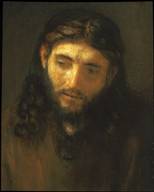

The story of 'L'Enfant Prodigue' is a reworking of the parable of the prodigal son, but told through the eyes of the mother. The biblical story is entirely male - the father and two sons and a servant are the only characters that appear. The opera takes a more female approach  - the mother grieving for her lost son, and when he returns she pleads with her husband to take him back. It struck me that this reworking could only be written by a Catholic librettist for whom the figure of Mary, the mediatrix, is central. The relationship between mother and son appeals very deeply to the human psyche (Freud had much to say about it), and who could not be moved by the tender reuniting of mother and son. The parable, on the other hand, reveals something of the nature of God as Father which the opera (perhaps deliberately) avoids. Yes, the characters in the opera end by giving thanks to God - 'The Eternal One' - at the end, but essentially the story is about human love, forgiveness and redemption rather than the eternal love of a heavenly Father. Musically, as an early work of Debussy it was more reminiscent of Chabrier and Bizet.

In complete contrast the second opera by Donizetti was set in the chicest of chic clothes store - think of Armani or Prada - with the characters dressed in a curious mixture of high blown 16th century long dresses, tights and puffed sleeves and 21st century Italian suits. The plot has as much substance as a soufflé, but is full of wit and delight. It concerns a jealous husband who keeps his wife under lock and key for fear of other men. The rest is too silly to mention. But the production fizzed with energy and life, moving from the 'House of Valois' (aka Armani) to the (Tennis) Court of Valois. The original plot actually specifies a hunt scene followed by a jousting tournament.

The Donizetti was as shallow as the Debussy was deep - but for all that I enjoyed them both immensely. One was food for the soul and the other a 'zabligione' for the senses.

Friday, 18 October 2013

The 'P' word v. the 'F' word

I'm interested that there is so much attention paid to whether or not Andrew Mitchell used the word 'pleb', and not to his adverbial use - as he admitted himself - of the 'f***' word: "Aren't you supposed to f***ing help us?" The word 'plebeian', as anyone with a classical Latin background (patrician perhaps) will know, means common, vulgar, boorish, undistinguished and unrefined. To use it is to demote someone to a lower class - and the British are still obsessed by class. I find the 'f***' word much more offensive, and ironically it is often a sign of a limited vocabulary. Perhaps Mr Mitchell is not the well-educated patrician he would like to be.